A. Preliminary
In the Shia, the first book of Hadith is a book Ali Ibn Abi-Talib that inside contained the traditions that are a direct imla' from the Prophet about halal, haram, and so on. Then recorded by Abu Rafi 'al-al-Shi'ite Qubthi in the book of al-Sunan, al-Ahkam and al-Qadaya. Ulema after finally membukukannya to a variety of books, [1] one of them is al-Kafi fi 'Ilmi al-Din who among the Shiites are among the main handle of the other books. [2]
A discussion of the book al-Kafi al-Kulaini work as a whole has done a lot. Whether through a comparison with the main book of Sunnis, on the criteria of validity of the hadith, [3] and in particular the study of al-Usul al-Kafi. But as far as the study authors do the study of al-Furu 'al-Kafi, almost not there. This study therefore critically upon the book has become very urgent to do. Furthermore, the author will attempt to explain at once analyze existing information. Especially in private settings al-Kulaini and generally in al-Furu 'al-Kafi (systematics, methods and content).
B. Setting biography of al-Kulaini
Author of the book al-Kafi is Siqat al-Islam Abu Ja'far Muhammad ibn Ya'qub ibn Ishaq al-al-Raziy Kulaini. [4] He was born around the year 254 or 260 H and H in the village called al-Kulain or Ray al-Kulin on Iran. Not much is known about exactly when al-Kulaini born. Other information about the only place to stay al-Kulaini than in Iran that is never inhabit Baghdad and Kufa. He moved to Baghdad since become chairman of the followers of Shiite cleric or twelve Imams there, during the reign of al-Muqtadir. He lived in an age sufara 'al-arba'ah (four representatives of Imam al-Mahdi). Besides the death year is 328 H / H 329 (939/940). He was interred at the entrance of Kufa. [5]
My father named al-Ya'qub ibn Ishaq Kulaini or al-Salsali, a prominent Shiite figures in Iran. In this city he began his education. Al-Kulaini have excellent personal and praised many scholars, even the schools of Sunni and Shiite clerics agreed to greatness and glory of al-Kulaini. [6] Ibn Hajar al-Asqalani said that the figure of al-Kulaini is a phenomenal figure which he is a faqih well muhaddis brilliant in his day. One of the most serious, active, and sincere in menda'wahkan Islam and disseminate the various dimensions of culture and siqat nicknamed al-Islam. [7]
Al-Kulaini compile the book al-Kafi for twenty years by doing a scientific journey to the traditions of various regions, such as Iraq, Damascus, Ba'albak, and Talfis. But not only the traditions that he was looking for but also a variety of sources and codified tradition of previous scholars. From this it seems a serious effort and a large scale. [8]
Imam al-Kulaini-hadith expert is someone who has a lot of teachers from among the ahl al-hadith stanza in the transmission process, between the teacher's name was Abdullah Ibn Umayyad, Ya'qub Ibn Ishaq and others. There are several books that have been written by the al-al-Kufi Kulaini beside them are: The Book of al-Ru'ya commentary, the book of al-Rijal, the book of al-Rad ala al-Qaramitah, books and other Rasa'il.
Many scholars which revealed the greatness of al-Kulaini of which this is, Ayatollah Jafar Subhani portray the other as the sun and the stars that adorn the sky. Shi'ites agree that this book is a major book and allowed berhujjah with the arguments in it. [9]
C. Systematics, Methods and Content of the Book of al-Furu 'al-Kafi al-Kulaini
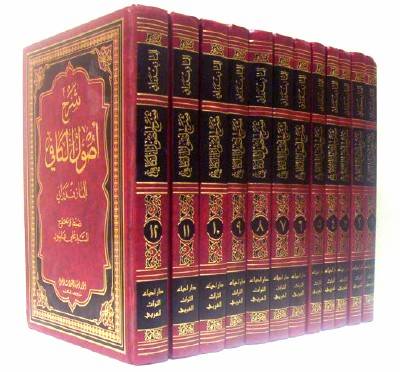
Al-Kafi is a hadith which serve a variety of subject matters of religion (usul), branches (furu ') and parks (rawdhah). Al-Kurki in her diploma Shafi al-Qadi al-Din 'Isa, say, al-Kulaini has brought together the traditions and secrets Rabbani syar'iyyah that will not be found outside of the book al-Kafi. This book has become a major holder in the Shiite sect in the search for religious proof. Even among them there is a moderation of the book without doing ijtihad as occurred among ahbariyyun. [10]
The book is arranged in a fairly long period of time, during the 20 years that is unrivaled. [11] Al-Hadith narrated Kulaini vast amount of various scholars ahl al-bait. The traditions embodied in al-Kafi Hadith totaled 16,199 pieces, which reached the level of valid, numbered 5702 pieces of hadith, the rate of 144 pieces hasan hadith, the hadith fruit muwassaq 1128, qawiy level [12] 302 pieces of hadith, and rate Da'eef 9485 pieces of hadith. [13]
Al-Kafi consists of eight volumes which are divided into thirty-five (35) books and 2355 chapters, the first two volumes contain about al-Usul (basic) first volume contains 1437 hadiths and the second volume contains 2346 hadith, which deals with the problem of belief. 5 volume goes on to speak about al-Furu '(fiqh) and a final volume contains 597 so-called Hadith al-Rawdhah (park) is a collection of hadith that describes various aspects and interests of religious as well as including some of the letters and sermons of the priests. [14] Juz This contains a statement about the ahl al-bait, the teachings of the priests, the pious manners, law and science of pearls, which may not go unpunished. Called al-rawdhah (park) because it contains things that are valuable and precious, which is identical with the park as the place to grow different kinds of fruits and Bungah. [15]
The themes of the al-Furu 'al-Kafi which began in volume III consists of five books, namely: [16]
Kitab al-Taharah, which consists of 46 chapters and 340 traditions.
Kitab al-Haid, which consists of 24 chapters and 93 traditions.
Kitab al-Jana'iz, contains about funerals and other matters related to the burial ceremony. Consisting of 95 chapters and 545 traditions.
Kitab al-Salah, consisting of 103 chapters and 924 pieces of hadith.
Kitab al-Zakah, consists of 47 chapters and 277 traditions.
Volume IV consists of two books namely;
Kitab al-Siyam, contains chapters shadaqah consisting of 43 chapters and 252 pieces of hadith. As for fasting consists of 83 chapters and 452 traditions.
Kitab al-Hajj and pilgrimage chapters, consisting of 236 chapters and 1486 fruit hadith.
Volume V consists of three books namely;
Kitab al-Jihad, consists of 32 chapters and 149 pieces of hadith.
Kitab al-Ma'isyah (ways to get a life), consists of 159 chapters and 1061 hadith.
Kitab al-Nikah, consisting of 192 chapters and 990 pieces of hadith.
Volume VI is composed of nine books;
Kitab al-'aqiqah, consists of 38 chapters and 223 traditions.
Kitab al-talaq, consists of 82 chapters and 499 pieces of hadith.
the book of al-'Itq tadbir wa wa al-al-Kitabah (other types of slaves and how memerdekakannya), consists of 19 chapters and 114 traditions.
Kitab al-Zayd (hunting), consists of 17 chapters and 119 traditions.
Kitab al-Zaba'ih (slaughter), consists of 15 chapters and 74 traditions.
Kitab al-At'imah (food), consists of 134 chapters and 709 pieces of hadith.
Kitab al-Asyribah (drinks), consists of 37 chapters and 268 traditions.
Kitab al-al-Tajammul Zayy wa wa al-Muru'ah (clothing, jewelry and decency), consists of 69 chapters and 553 traditions.
Kitab al-Dawajin (pets), consists of 13 chapters and 106 traditions.
Volume VII consists of seven books, namely;
Kitab al-Wasaya (wills), consists of 39 chapters and 240 traditions.
Kitab al-Mawaris contains 69 chapters and 309 traditions.
Kitab al-Hudud contains 63 chapters and 448 traditions.
Kitab al-Diyat (qisas law and details of how redemption if someone is physically hurt), consists of 56 chapters and 366 traditions.
Kitab al-Shahadah (testimony in legal cases), consists of 23 chapters and 123 traditions.
Kitab al-Qada wa al-Ahkam (rules about the behavior of judges and the terms), consists of 19 chapters and 78 traditions.
Kitab al-Ayman al-Nuzur wa wa al-expiation (of the oath, the promise and redemptive ways off the error when the second party), consists of 18 chapters and 144 traditions.
So the overall content of al-Furu 'al-Kafi the hadith numbered 10,474, with the details of volume III contains 2049 hadiths, Volume IV contains 2424 hadiths, Volume V contains 2200 hadiths, Volume VI contains 2727 hadith and hadith 1074 Volume VII. Systematic division of the book and the chapter of al-Kulaini used very systematically, making it easier for the Muslims, especially the Shiites to use it as a major reference in their lives.
D. Analysis of Writing History of Al-Kafi
From the above explanation, it seems the influence of the environment and society are constantly evolving. Because it is natural many Shi'i traditions contained in this book. Al-Kulaini Buhaiwiyah lived during Dynasty (945-1055H). This period is a time most conducive to the elaboration and standardization of Shi'ism than previously. [17] In the past a difficult time for the Shiites to develop its presence in various fields.
At this time that al-Kulaini trying to meet the expectations of most of the Shiites who asked him to write a book that covers the entire tradition of religious issues, the book is expected to satisfy the students, and seekers can be used as a reference guide and can be used as a source of religious knowledge . With the book is expected that people can carry out the commandments of Allah and the Sunnah of the Prophet PBUH. Kitab al-Kafi answer the needs of the scholars of hadith, fiqh, theology, mission spokesman, debater (mujadil) and students. [18] Therefore, this book covers the subjects of religion usul, furu ', morals, advice, ethics and other Islamic teachings.
Al-Kafi is a collection of books of hadith from the Prophet and the Imams are forwarded to the Muslim community by the disciples of the Imams. The name Al-Kafi has meaning "enough", this is a book that includes the traditions narrated by Shi'ite Imams. Al-Muqaddimah Kulaini in his book explains:
"... You want to have a book that will satisfy your religious needs (kafin), which includes a variety of knowledge about religion, which is useful to provide direction for students and teachers. Which can be used for anyone who wants to gain knowledge and amaliyyah religion and the laws according to the hadith appears (ASAR) from a trustworthy person (Imam) ... "[19]
By looking at the history of the preparation of this book that reached 20 years and is supported by the current socio-political conditions that are conducive to the Shi'a. According to the authors is very reasonable if the preparation of al-Kafi Hadith reached 16,199, plus more with the phenomenon that the Imams after the Prophet's hadith narrated entitled to death.
E. Analysis Method The writing of al-Furu 'al-Kafi
There are some things that were characteristic of this book, among them: are as follows;
The existence of peringkasan sanad. The term sanad according to experts Shi'i hadith is the narrator of hadith in sequential quoting from the initial source, either from the Prophet., The priests, the friends and from others who are shown to the priest, to the narrator the latter. [20] Sanad-sanad of the book is sometimes written in full, but sometimes al-Kulaini removing most ashhabuna sanad by using the word, so and so, 'iddah jama'ah and so on. It is intended for the narrators-narrators are already well known. [21]
If al-Kulaini mention our friend of Ahmad Ibn Muhammad Ibn al-Barqi, then the question is Ali Ibn Ibrahim, Abdullah Ahmad Ali Ibn Muhammad Ibn Abdullah from his father and Ali ibn al-Husayn al-Sa'dabadi. While the designation of Sahl ibn Ziyad and Muhammad ibn Hasan Muhammad Ibn 'Aqil, and others. They are the transmitters that are considered both by al-Kulaini and complete written on the previous hadith.
For example in the book of al-Furu 'sixth volumes of the ninth chapter of the freed slaves, al-Kulaini asserts that what is meant by "iddatun min ashabina' was' Ali Ibn Ibrahim, Muhammad Ibn Ja'far, Muhammad ibn Yahya, 'Ali Ibn Muhammad Ibn' Abdullah al-Qummi, Ahmad Ibn Abdillah, 'Ali ibn Husayn, who were all from Ahmad ibn Muhammad ibn Khalid from Uthman ibn Isa.
Peringkasan sanad is based on al-Kulaini desire not to extend the writing, and is performed only on the narrators are considered good and trusted by him. Therefore, if the complete chain of transmission has been written on the previous hadith, then the next al-Kulaini did not write it in full.
The presence of the narrator in variety to their Imam and the other narrators. When compared with other traditions outside the Shiite different degrees of assessment. As such, they still recognize the transmitters of tradition from other circles and consider the level is still strong.
Theological assumption of no interruption after the death of the Prophet Muhammad's revelation, therefore Shi'ite Imams may issue such hadith found in al-Rawdhah last volume. [22] According to them, among the Shiite religious argument does not necessarily ended with the death of the Prophet, but keep running until the twelve imams. From this new revelation stop. In its development, all religious matters then poured in the standard works, including books of al-Kafi.
F. Criterion validity of Hadith al-Kulaini
Al-Kulaini in determining the validity of the criteria contained in the hadith of al-Kafi, using the criterion validity of the hadith which usually used by the scholars mutaqaddimin, this is because the lifetime of al-Kulaini mutaqaddimin included in the generation of scholars. While the famous, there are two traditions share, during the mutaqaddimin scholars, narrators during the second figure, Sayyid Ahmad Ibn Thawus Dawud and Ibn al-Hulliy. The division of this tradition revolves around the tradition and ghairu mu'tabar mu'tabar. This division in terms of external quality (accuracy of the narrators), like the Hadith kemuktabaran associated with Zurarah, Muhammad ibn Muslim ibn Yasar and Fudhail. Then the tradition of quality so it can be used as proof [23].
Meanwhile, according to tradition Ja'fariyah jumhur divided into mutawatir and Munday. Reflects their influence appears in the hadith mutawatir intent. Because according to them is the hadith mutawatir be provided minded people who hear not polluted doubtful or deny the hadith requiring imitation and intention. [24] The influence of Imamat here can be known when they refused to go against those who differ with those who deny the provision of school amir Ali al-believers as priests. They also argued about his mutawatir saqalain and Hadith al-Hadith al-Ghadir. [25]
Meanwhile, on Sunday according to their traditions are divided into four levels or four categories, which is based on a review of the sanad (external) and honor (internal), and the fourth level is the principal part as the reference every other part. The four levels are: sahih, hasan, muwassaq, and Da'eef. The division is then applicable to the present. [26] However, there are some who approve of the Shiite cleric qawiy quality in the distribution of these traditions, so the quality level of hadith into five (5), namely:
Hadith Sahih
They are valid according to the Hadith, traditions that continued sanadnya the priest who Ma'shum and fair in all levels and the amount berbilang. In other words, hadith sahih hadith according to them is a transmission that has a good standard of priests among those who Ma'shum. [27]
Imami influence here seems to restrictions of the priest who Ma'shum with the requirements of the narrators must be Twelver Shiites. So to the extent of the hadith is not valid if the narrators rather than Ja'fariyah Isna 'Asyariyah in all levels. [28]
Among Shia Imami explains why the existence of this requirement is not acceptable Fasiq person's history, although from the side of his religion he is said to be a person who always avoid the lie. With still must examine history of the wicked and those who differ from the Muslims (meaning: in addition to Twelver). If he dikafirkan then he fabricated his history although he was fairly unknown and forbidden lies.
According to al-Mamqani, justice must be in line with the creed and faith, and a requirement for every narrators. In line with the word of God, "if you come to the wicked brings a message, so check carefully. (Surat al-Hujurat; 6).
From the description it could be concluded, that faith is a requirement for the narrators and the history of the wicked shall be observed, whereas apart Ja'fariyah followers are infidels or wicked, then history can not be valid at all. From here is not only visible effect of the Imamate, but also the attitude seems extreme and zindiq.
Hadith Hasan
Shiite hadith is hasan hadith according sanadnya concatenated to the priest who Ma'shum of narrators fair, according to the nature of justice in all or part of the narrator in sanadnya levels. [29]
From these definitions it appears that they require hasan hadith as follows;
Sanadnya met the priest who Ma'shum without interruption.
All the narrators of the Imami.
All the narrators commendable with compliments received and acknowledged without leading to criticism. It is certain that if the narrators condemned, then he is not accepted and acknowledged no history.
There is no description about the fairness of all the narrators. For if all the narrators of the hadith to be sahih fair condition as specified above.
All it has to fit in all or part of the narrator in sanadnya.
Hadith Muwassaq [30]
Hadith are traditions that knit muwassaq sanadnya the priest who Ma'shum with people who otherwise siqah by the followers of Shia Imami, but he damaged akidahnya, like she was one of a different firqah Imami though he was a Shiite in all or part of the narrators, while others including the narrators are valid.
This definition gives the notion of the following requirements:
Bersambungnya Ma'shum sanad to the priests.
The narrators instead of Twelver groups, but they are otherwise specifically siqah by ja'fariyah.
Some narrators valid, and not necessarily from Imami.
Reflects their influence appears in the following matters:
The position of hadith after hadith sahih muwassaq placed and hadith hasan because of the narrators of Ja'fariyah apart.
The statement must be from the group Ja'fariyah siqah own. Because for them other than statements of Ja'fariyah siqah not enough, even people who otherwise siqah by them (other than Ja'fariyah) is Da'eef according to them.
Al-Mamqani explained that the inauguration should siqah of his followers by saying, in addition to receiving the assessment siqah Imami, if he's elected imams to receive or deliver testimony in wills, endowments divorce, or the priest prayed for mercy and good pleasure of him, or is empowered to take care of waqf a country, or be a deputy, assistant fixed or author, or licensed berfatwa and decide the law, including the sheikh or diploma [31], or have seen the glory of the twelfth imam.
Hadith Da'eef
In the view of Shi'ites, Da'eef hadith is hadith that does not meet one of the three criteria above. Such as in sanadnya because there are wicked people with disabilities, or people who do not know his condition, or lower than that, like the people who forged hadith. [32]
In a sahih hadith shows that they value other than Ja'fariyah as unbelievers or ungodly, so revealed Da'eef history that should not be accepted, nor received from other than those stated Ja'fariyah except siqah by them.
On that basis they rejected the traditions of three Righteous sahih al-Rashidun (Abu Bakr, Umar, and Uthman) and another friend, successors, and priests were scholars of hadith and jurists, the article they do not believe in the creed of Twelver isnâ 'asyariyah. For authentic narrations which in sanadnya there are the friends and the senior priests trustful, but do not believe in the creed of twelve priests, the narrations are expressed by the Ja'fariyah Da'eef.
Practice of law Hadith Da'eef
As for the traditions Da'eef not mean it can not practiced. The existence of these traditions can be compared with the hadith sahih hadith when the popular and in accordance with their teachings. Thus it appears that there is a strong influence on the traditions that developed among the author of the book. Therefore, no wonder many Shiite tradition that appears in the book of hadith. An example is the issue of Hajj, in which not only addressed the issue rituals of Hajj to the House only, but include other things like a pilgrimage to the tomb of the Prophet Mohammed and their priests.
Hadith Qawiy [33]
According Muhaqqiq and muhaddis al-Nuri, who is a strong level is due to some or all of the characters sanadnya are people who are praised by non-Imami Muslims, and no one had weakened his Hadith. Muwassaq Hadith (which gave birth to kepercaraan), sometimes also called qawiy (strong) due to strong zhan (allegations of its truth), as well as confidence in him. [34]
Depth qawiy hadith is not widely known by name among the Imami Shiites and Sunnis apart. It is because scholars have agreed jumhur division level will be four kinds of Shiite traditions. In addition, a portion of the level qawiy narrator is derived from non-Imami, while they limit other than to accept the hadith of the Twelver. Since the main requirement is to be received Hadith from among the Imami.
G. Quality of Hadith in al-Furu 'al-Kafi
As we know that the book of al-Furu 'al-Kafi includes narrations relating to legal jurisprudence. So the book is the same as the book Man La Yahdhuruh Faqih al-Faqih al-Sadiq and two books of al-al-Tahzib Thusi and al-Istibsar. The influence of Imamat in al-Furu 'is also very thick, for example in chapter Hajj, al-Kulaini narrated from Wahb, he said, there is a hadith which states that people who do not bermazhab Ja'fariyah then after the Hajj then he followed the school of Ja'fariyah person disunahkan repeat his Hajj. For people Ja'fariyah, should not be substituted Hajj apart from Ja'fariyah except against his father. Being in a pilgrimage to the sunnah then disunahkan muakkad to visit the tomb of the priests.
Other examples of al-Furu 'contained in Chapter ablution and Mawaris [35]
· ان العبد اذا توضأ فغسل وجهه تناثرت ذنوب وجهه واذا غسل يديه الى المرفقين تناثرت عنه ذنوب يديه واذا مسح رجليه او غسلهما للتقية تناثرت عنه ذنوب رجليه وان قال في اول وضوئه بسم الله الحمن الرحيم طهرت اعضاؤه كلها من الذنوب وان قال في اخر وضوئه او غسله من الجناية سبحانك اللهم وبحمدك اشهد ا لا اله الاانت استغفرك واتوب اليك واشهد ان محمدا عبدك ورسولك واشهد ان عليا وليك وخليفتك بعد نبيك وان اوليائه خلفائه واوصيائه ... ..
· عدة من اصحابنا, عن أحمد بن محمد عن ابن محبوب قال: أخبرني ابن بكير عن زرارة قال: سمعت أبا عبد الله عليه السلام يقول: ولكل جعلنا موالي مما ترك الوالدين والاقربون, قال: إنما عني بذلك أولى الأرحام في الموارث ولم يعن أولياء النعمة , فأولاهم بالميت أقربهم إليه من الرحم التي تجره إليها
· علي بن ابراهيم عن ابيه ومحمد بن اسماعيل عن الفضل بن شاذان جميعا عن ابن ابي عمير عن عمر بن اذنيه عن محمد بن مسلم والفضيل بن يسار وبريد العجلي وزرارة ابن اعين عن ابي جعفر عليه السلام قال: السلام لا تعول ولاتكون اكثر من ستة.
· وعنه عن محمد بن عيسى بن عبيد عن يونس بن عبد الرحمن عن عمر بن اذنيه مثل ذلك
In the history of ablution at the top, it looked very much a forgery, that is in the editorial "or wash both feet because taqiyah", and in the editorial "that the people he loves (Ali) was the caliph and the people who diwasiatkannya". So their opinions in connection with the schools of fiqh issues is what makes them fake hadith to help two people (al-Thusi and al-'Amili).
Al-Thusi and al-'Amili are two people who say that washing taqiyyah applied to two feet. So fanatical Shiite according to the opinion of his school and in the thinking and ta'wil kerancauan has led to more adverse effects, namely forgery of hadith.
While looking at the history of the peringkasan Mawaris sanad. As to the quality of the hadith about this Mawaris, explicitly, is unknown because the information can be in al-Furu 'is very limited, with no explanation quality Hadith. And it has been known that in the book al-Kafi are not all valid.
However, after the authors found no discussion of al-Jarh ta'dil wa al-Usul al-Hadith and the fi 'al-Dirayah Ilmi in Shia tradition, the sanad peringkasan not affect the quality of the hadith. So the traditions of Mawaris can still be used and can be used as argument.
This phenomenon can be used as evidence, that the traditions in al-Kafi al-Kulaini, especially al-Furu 'does contain a variety of quality, from valid, hasan, muwassaq, qawiy, even Da'eef.
H. Conclusion
After doing a search on the books of Shia, the authors found the book both sanad of hadith and honor of the Shiite compiled by Jafar Subhani, both Usul al-Hadith wa Ahkamuhu fi 'al-Dirayah ilmi, and Kulliyat fi 'al-Rijal ilmi. From this it can be concluded that the study of sanad and honor have been studied in depth. When compared with the Sunni tradition, the study ulum al-Shi'i hadith can also be considered to have matured. Although still very strong influence Imami. This is proven by the hadith is the condition of receipt must be from among the Imami. That is the main requirement in the science of al-jarh wa al-ta'dil.
Similarly to the study towns, the theological notion of revelation is not stalled after the death of the Prophet, and the priests at the school can issue a Shia tradition. So, do not be surprised if the letters, sermons of priests and other things that grab the religious teachings positioned equivalent to the hadith. This makes the study of Shiite hadith differ from Sunni circles. According to the opinion of the writer, the two terms is what makes the cause of the Shiite tradition far more than the number of Sunni.